


Page 61 - Policy & Economic Report - July 2025
P. 61
POLICY AND ECONOMIC
           ROEILPO&RGTAS MARKET

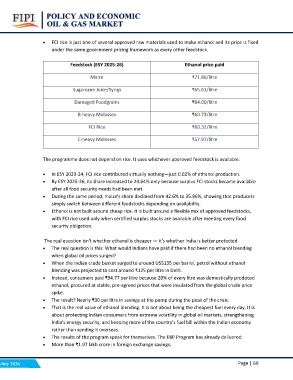
           • FCI rice is just one of several approved raw materials used to make ethanol and its price is fixed
               under the same government pricing framework as every other feedstock.

           Feedstock (ESY 2025-26)  Ethanol price paid
                      Maize             ?71.86/litre
                                        ?65.61/litre
            Sugarcane Juice/Syrup       ?64.00/litre
             Damaged Foodgrains         ?60.73/litre
                                        ?60.32/litre
               B-heavy Molasses         ?57.97/litre
                     FCI Rice

               C-heavy Molasses

           The programme does not depend on rice. It uses whichever approved feedstock is available.

           • In ESY 2023-24, FCI rice contributed virtually nothing—just 0.02% of ethanol production.
           • By ESY 2025-26, its share increased to 24.64% only because surplus FCI stocks became available

               after all food security needs had been met.
           • During the same period, maize's share declined from 42.6% to 35.96%, showing that producers

               simply switch between different feedstocks depending on availability.
           • Ethanol is not built around cheap rice. It is built around a flexible mix of approved feedstocks,

               with FCI rice used only when certified surplus stocks are available after meeting every food
               security obligation.

           The real question isn't whether ethanol is cheaper — it's whether India is better protected
           • The real question is this: What would Indians have paid if there had been no ethanol blending

               when global oil prices surged?
           • When the Indian crude basket surged to around US$135 per barrel, petrol without ethanol

               blending was projected to cost around ?125 per litre in Delhi.
           • Instead, consumers paid ?94.77 per litre because 20% of every litre was domestically produced

               ethanol, procured at stable, pre-agreed prices that were insulated from the global crude price
               spike.
           • The result? Nearly ?30 per litre in savings at the pump during the peak of the crisis.
           • That is the real value of ethanol blending. It is not about being the cheapest fuel every day. It is
               about protecting Indian consumers from extreme volatility in global oil markets, strengthening
               India's energy security, and keeping more of the country's fuel bill within the Indian economy
               rather than sending it overseas.
           • The results of the program speak for themselves. The EBP Program has already delivered:
           • More than ?1.97 lakh crore in foreign exchange savings;

July 2026                                               Page | 60

