


Page 27 - Policy Economic Report -August 2026
P. 27
POLICY AND ECONOMIC
                 OIL & GAS MARKET

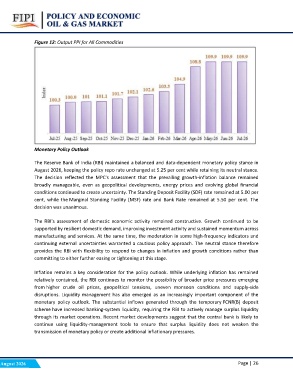
             Figure 12: Output PPI for All Commodities

             Monetary Policy Outlook

             The Reserve Bank of India (RBI) maintained a balanced and data-dependent monetary policy stance in
             August 2026, keeping the policy repo rate unchanged at 5.25 per cent while retaining its neutral stance.
             The decision reflected the MPC's assessment that the prevailing growth-inflation balance remained
             broadly manageable, even as geopolitical developments, energy prices and evolving global financial
             conditions continued to create uncertainty. The Standing Deposit Facility (SDF) rate remained at 5.00 per
             cent, while the Marginal Standing Facility (MSF) rate and Bank Rate remained at 5.50 per cent. The
             decision was unanimous.

             The RBI's assessment of domestic economic activity remained constructive. Growth continued to be
             supported by resilient domestic demand, improving investment activity and sustained momentum across
             manufacturing and services. At the same time, the moderation in some high-frequency indicators and
             continuing external uncertainties warranted a cautious policy approach. The neutral stance therefore
             provides the RBI with flexibility to respond to changes in inflation and growth conditions rather than
             committing to either further easing or tightening at this stage.

             Inflation remains a key consideration for the policy outlook. While underlying inflation has remained
             relatively contained, the RBI continues to monitor the possibility of broader price pressures emerging
             from higher crude oil prices, geopolitical tensions, uneven monsoon conditions and supply-side
             disruptions. Liquidity management has also emerged as an increasingly important component of the
             monetary policy outlook. The substantial inflows generated through the temporary FCNR(B) deposit
             scheme have increased banking-system liquidity, requiring the RBI to actively manage surplus liquidity
             through its market operations. Recent market developments suggest that the central bank is likely to
             continue using liquidity-management tools to ensure that surplus liquidity does not weaken the
             transmission of monetary policy or create additional inflationary pressures.

August 2026                                             Page | 26

