


Page 15 - Policy Economic Report - September 2026
P. 15
POLICY AND ECONOMIC
                    OIL & GAS MARKET

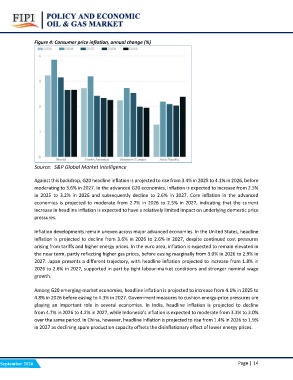
                Figure 4: Consumer price inflation, annual change (%)

                Source: S&P Global Market Intelligence

                Against this backdrop, G20 headline inflation is projected to rise from 3.4% in 2025 to 4.1% in 2026, before
                moderating to 3.6% in 2027. In the advanced G20 economies, inflation is expected to increase from 2.5%
                in 2025 to 3.2% in 2026 and subsequently decline to 2.6% in 2027. Core inflation in the advanced
                economies is projected to moderate from 2.7% in 2026 to 2.5% in 2027, indicating that the current
                increase in headline inflation is expected to have a relatively limited impact on underlying domestic price
                pressures.

                Inflation developments remain uneven across major advanced economies. In the United States, headline
                inflation is projected to decline from 3.6% in 2026 to 2.6% in 2027, despite continued cost pressures
                arising from tariffs and higher energy prices. In the euro area, inflation is expected to remain elevated in
                the near term, partly reflecting higher gas prices, before easing marginally from 3.0% in 2026 to 2.9% in
                2027. Japan presents a different trajectory, with headline inflation projected to increase from 1.8% in
                2026 to 2.6% in 2027, supported in part by tight labour-market conditions and stronger nominal wage
                growth.

                Among G20 emerging-market economies, headline inflation is projected to increase from 4.1% in 2025 to
                4.8% in 2026 before easing to 4.3% in 2027. Government measures to cushion energy-price pressures are
                playing an important role in several economies. In India, headline inflation is projected to decline
                from 4.7% in 2026 to 4.2% in 2027, while Indonesia's inflation is expected to moderate from 3.3% to 3.0%
                over the same period. In China, however, headline inflation is projected to rise from 1.4% in 2026 to 1.9%
                in 2027 as declining spare production capacity offsets the disinflationary effect of lower energy prices.

September 2026                                                         Page | 14

